

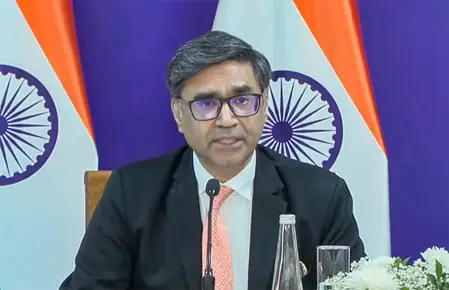
In a firm rebuttal to speculations linking a US trade pact to cuts in Russian oil purchases, Foreign Secretary Vikram Misri declared on Monday that India’s energy choices are dictated purely by national priorities, focusing on supply diversity and cost-effectiveness.
As a fast-growing economy heavily reliant on imported energy, India must prioritize uninterrupted and economical fuel supplies, Misri told reporters in New Delhi. Safeguarding consumer interests tops the agenda, he stressed, given that the country sources 80-85% of its energy externally—a factor that directly influences domestic inflation rates.
The core pillars of India’s energy strategy—sufficient supply, fair prices, and dependable delivery—guide every import decision, according to Misri. Public and private sector oil firms take these calls based on real-time market dynamics, ensuring alignment with broader national goals.
Misri portrayed India as a pivotal player in global energy stability, countering market uncertainties through prudent policies. ‘We act as a stabilizing factor in international energy markets,’ he noted, reinforcing the nation’s role beyond mere consumption.
Complementing this, Minister Hardeep Singh Puri revealed in Parliament that strategic reserves stocked by ISPRL—holding 4.094 million metric tonnes or 77% of capacity—can sustain the country for 74 days during supply crises.
India’s refining prowess has surged, making it the third biggest oil user and fourth largest refiner globally, with capacity now at 320 million metric tonnes annually, up from 260. These developments signal a resilient approach to energy independence in an unpredictable world.