

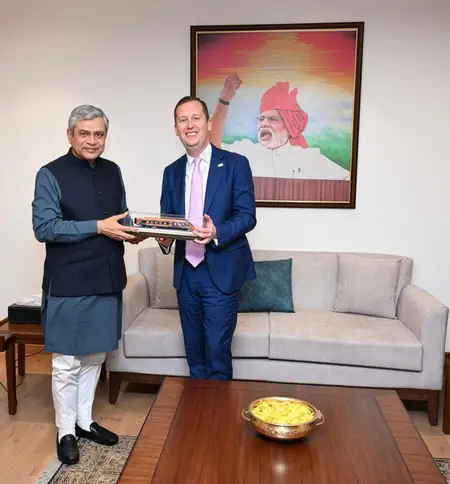
In a key development for bilateral tech relations, Union Minister for Electronics and IT Ashwini Vaishnaw met US Ambassador Eric Garcetti in New Delhi on Monday. The agenda focused intensely on semiconductors, electronics manufacturing ecosystems, and securing supply chains amid global disruptions.
Taking to X, Vaishnaw called the interaction ‘very fruitful,’ outlining priorities in strategic partnerships. He noted the emphasis on fortifying capabilities in high-tech manufacturing sectors vital for future economies.
A major highlight was the forward-looking mention of the India AI Impact Summit 2026. Slated for mid-February next year, this mega-event has exploded in popularity with over 35,000 sign-ups already. Drawing from 100+ countries, it will host 500+ startups across 500 sessions, dwarfing previous global AI gatherings.
The Ministry’s statement paints a picture of unprecedented interest. This summit prioritizes ground-level results over rhetoric, aligning with India’s mission for ethical AI proliferation. Diverse stakeholders—including heads of government, ministers, CEOs, academics, and NGOs—will drive discussions on inclusive tech growth.
Projections include 15-20 world leaders, 50+ international ministers, and 40+ top executives in attendance. This scale reflects AI’s transformative potential and the urgent need for collaborative frameworks.
Contextually, this meeting aligns with India’s aggressive semiconductor ambitions. Recent policy incentives have lured giants like Micron and Tata Electronics, aiming for self-reliance and export prowess. US partnerships could accelerate chip design, fabrication, and assembly in India.
Supply chain talks are particularly timely, given recent global shortages and geopolitical risks. By diversifying away from single dependencies, both nations aim to build resilience.
Vaishnaw’s engagement with Garcetti exemplifies proactive diplomacy. It sets the stage for deeper investments, skill development, and innovation hubs. As the world races towards AI dominance, India-US synergy could redefine global standards.