

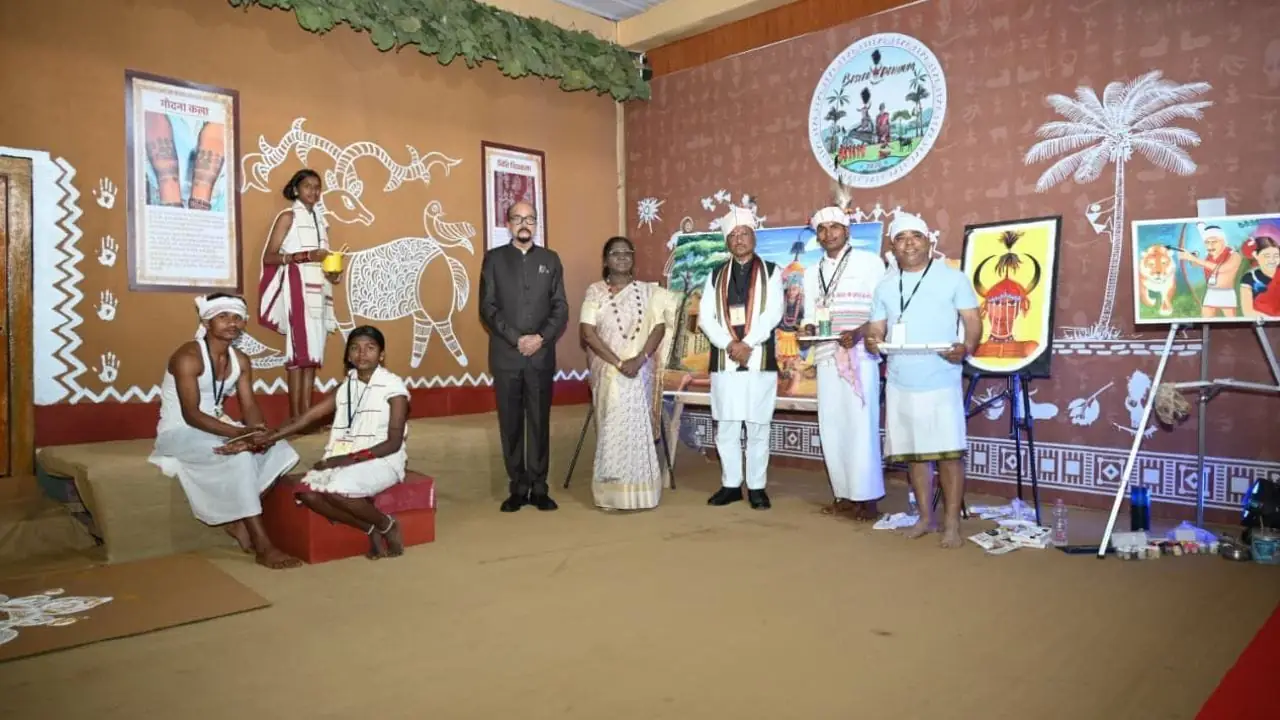
In a heartfelt endorsement of India’s tribal heritage, President Droupadi Murmu visited the Bastar Pandum festival, touring an elaborate exhibition that left her visibly impressed. Arriving for the inauguration, she delved into displays representing Bastar’s indigenous communities and their masterful handicrafts.
The President spent considerable time at each stall, discussing creation processes with craftsmen. She lauded Bastar Pandum as an essential bridge to showcase tribal arts globally, spotlighting Dhokra bronzes, terracotta pottery, wood engravings, and more.
Dhokra, India’s ancient tribal metal art, uses lost-wax techniques with clay molds, wax models, and brass melting to produce unique, hand-forged pieces depicting gods, nature, and daily life. Each artifact tells a story of tradition passed down generations.
Nearby, terracotta figures embodied rural faith and customs, crafted from local clay. Wood carving stalls featured intricate reliefs on premium woods like sagwan and bija, using handmade chisels to evoke spiritual narratives.
Sisal weaving produced durable fabrics and items, while bamboo craftsmanship offered elegant baskets and furniture. Wrought iron works impressed with their robust forms, and tribal jewelry stalls gleamed with handmade pieces symbolizing community identity.
The Tumba section displayed gourd-based musical instruments, alongside attire from key tribes worn by locals. Food stalls tempted with authentic dishes like Kulti dal, Tikhur sweets, and herbal drinks, evoking tribal culinary traditions.
Folk art panels illustrated Bastar’s landscapes, festivals, and literature, enriching the cultural narrative. Murmu’s enthusiastic appreciation signals strong governmental support for sustaining these vanishing arts amid modernization.