
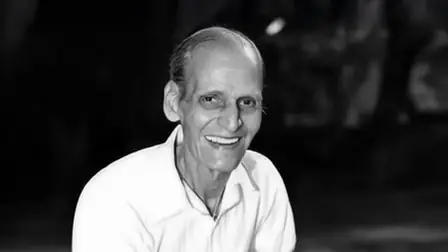


Few poets have wielded words like weapons against oppression and anthems of unity. Kavi Pradeep, the voice behind ‘Ae Mere Watan Ke Logon,’ turned simple lyrics into a national phenomenon that moved Prime Minister Jawaharlal Nehru to tears and earned bans from the British Empire.
Born in 1915 in Badnagar, Madhya Pradesh, Pradeep honed his skills at Lucknow University before chasing stardom in 1930s Mumbai. A pivotal poetry gathering in 1939 landed him a job at Bombay Talkies, kickstarting a legacy of over 1,700 songs across 71 films, many pulsing with patriotic fervor.
British censors trembled at his boldness. ‘Chal Chal Re Naujawan’ from ‘Bandhan’ (1940) was outlawed for inciting youth. ‘Kismet’ (1943) songs drove him into hiding, marking him as public enemy number one for colonial powers.
The 1962 Sino-Indian war birthed his masterpiece. Reciting ‘Ae Mere Watan Ke Logon’ to Lata Mangeshkar, he saw her weep and commit instantly. Rehearsals with Asha Bhosle fell through, but Lata delivered a solo performance on January 26, 1963, at National Stadium. With Nehru and Radhakrishnan on stage, 50,000 voices fell silent as emotions overflowed. Nehru’s poignant words sealed its immortality: ‘One unmoved by this is no true Indian.’
Awards like the Dadasaheb Phalke crowned his career, yet late life brought isolation. After his wife’s death, paralysis set in, and his children deserted him. Rescued by a kind Kolkata entrepreneur, Pradeep passed away in 1998. His memory endures through stamps and annual honors, reminding us of a poet who captured India’s spirit.