


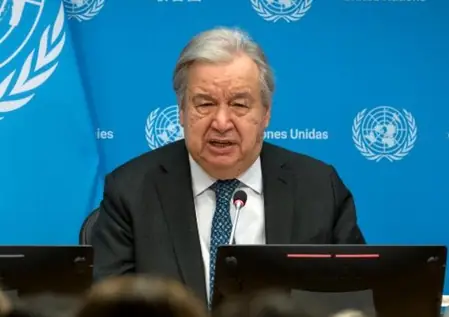
United Nations Secretary-General Antonio Guterres issued a sobering alert on Thursday as the New START treaty—pivotal in limiting US and Russian nuclear forces—reaches its end. Describing it as a ‘grave signal’ for world peace, he highlighted how this marks the first era in more than 50 years without enforceable caps on the strategic nuclear weapons held by these two giants, who dominate global stockpiles.
For over five decades, arms control agreements have anchored international stability. They averted disasters from erroneous assessments and slashed thousands of warheads from arsenals. New START, effective since 2011, specifically restrained deployed warheads and their delivery vehicles. Its collapse comes amid heightened nuclear dangers not seen in generations.
‘This expiration unfolds at the worst possible juncture,’ Guterres noted, pointing to surging risks of nuclear conflict. But he urged optimism: leaders from both countries have conceded that unchecked arms races breed instability. The path forward lies in renewed dialogue to craft verifiable, risk-mitigating controls tailored to today’s volatile landscape.
Guterres applauded this common ground while pressing for immediate talks. The world expects concrete steps—a new framework ensuring transparency, limits, and enhanced safety. With the US exiting the INF Treaty in 2019, New START’s failure leaves a void, compelling a rethink of nuclear restraint in multipolar times. As history shows, dialogue has repeatedly pulled humanity from the brink; now, it’s imperative once more.