


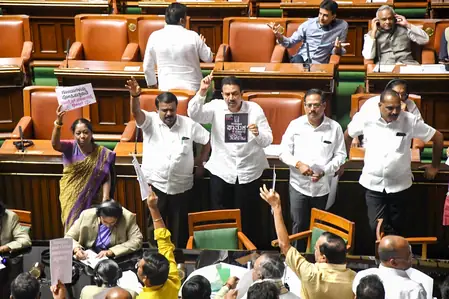
Bengaluru’s legislative chambers erupted in controversy as Karnataka’s Assembly and Council unanimously backed a motion against the Union government’s proposed overhaul of rural employment schemes. The resolution targets the ‘Viksit Bharat – Employment and Livelihood Mission (Rural) Act’, calling for MGNREGA’s unadulterated revival amid vehement opposition from BJP-JD(S) ranks.
Minister Priyank Kharge took the floor first, invoking L.K. Advani’s historical endorsement of MGNREGA to question the new ‘VB Jeeram Ji’ initiative. He charged that even BJP MPs like Varun Gandhi had raised worker plight issues, only for the Centre to now rewrite the rules unilaterally. Kharge portrayed the shift as opaque and detrimental.
BJP’s R. Ashok countered sharply outside, deeming the sudden resolution ‘illegal’ for bypassing mandatory seven-day notice and debate. He touted the scheme’s transparency, increased work entitlements to 125 days, and pre-launch multistakeholder dialogues. Ashok leveled serious corruption charges against Congress agents in MGNREGA execution, backed by figures: over 16,000 crore rupees allegedly misused in recent years via irregularities.
With votes favoring the ruling coalition, Speakers in both houses declared the resolution passed, prompting opposition walkouts and session suspensions. CM Siddaramaiah weighed in, lamenting absent state consultations on funding splits and Gandhi’s name change, pledging a formal appeal.
This clash reveals fault lines in federal dynamics. The Centre argues for modernization—rebranding a 20-year-old program with budget boosts—while Karnataka views it as erosion of guarantees. As states grapple with matching contributions amid fiscal strains, the row could foreshadow nationwide resistance, testing the balance between reform and entitlement preservation.