



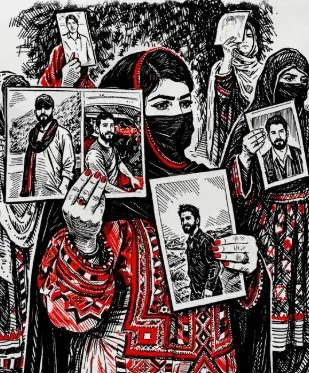
In Berlin on January 30, a panel of analysts warned that Pakistan’s 27th Constitutional Amendment threatens to dismantle judicial safeguards, amplifying executive dominance. This comes at a critical juncture for Balochistan, where enforced disappearances and extrajudicial killings have long cast a shadow over human rights.
The forum, led by ex-BBC journalist Sahr Baloch, featured insights from Rafiullah Kakar, a sharp political commentator, and Abdullah Abbas of the Human Rights Council of Balochistan. Abbas painted a grim picture, asserting Balochistan’s unique vulnerability. ‘The constitution is practically absent here,’ he said, decrying how state narratives have normalized atrocities against dissenters.
The amendment, according to Abbas, seals off remaining avenues for justice. He accused amendments to anti-terror laws of rubber-stamping abductions, evoking China’s surveillance-driven crackdown on Uyghurs. ‘This is repression baked into the system,’ he declared.
Kakar elaborated on the amendment’s mechanics, pointing out its redefinition of judicial oversight. Executive actions will evade meaningful scrutiny, reshaping Pakistan’s power balance in favor of unchecked authority.
The discussion underscored broader fears: as political marginalization deepens in Balochistan, the amendment risks accelerating a cycle of violence and impunity. Global observers are calling for scrutiny, emphasizing that Pakistan’s constitutional pivot could destabilize the region further.