



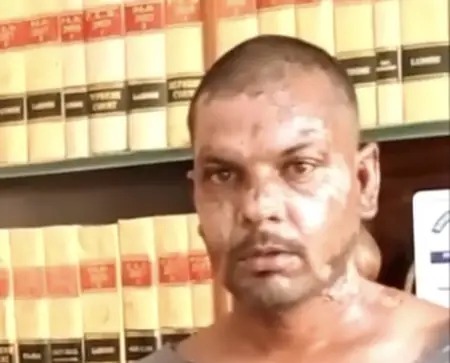
Pakistan’s Punjab province witnessed a gruesome case of faith-based violence when a Christian security guard was set on fire by a Muslim coworker in Bahawalpur on January 21. The survivor, Zahid Masih, is battling for recovery after enduring what rights groups describe as a premeditated attempt to murder him for his religious beliefs.
The confrontation stemmed from persistent religious slurs by Mohammad Ali Azhar, who allegedly mocked Christianity and hurled obscenities at Masih. Defending his dignity, Masih’s resistance provoked Azhar to drench his face in petrol and strike a match, screaming supremacist rhetoric.
Thanks to the timely rescue by fellow Christians, Masih avoided a fatal end, but the physical scars and mental torment will linger for years. VOPM, speaking for Pakistan’s beleaguered minorities, expressed profound alarm at the rising tide of attacks on Christian workers in bonded labor roles.
‘These laborers toil in hazardous conditions, vulnerable to exploitation and now outright attempts on their lives,’ VOPM noted, pointing to a pattern of unchecked bigotry in rural work environments. The community is gripped by fear, with many questioning their safety in a nation founded on principles of equality.
A chorus of human rights voices has risen, urging Pakistani authorities to expedite justice, prosecute under stringent blasphemy and hate crime statutes, and overhaul labor protections for minorities. Experts advocate for educational campaigns to dismantle prejudice and judicial safeguards against biased policing.
As treatment for Masih’s burns and trauma proceeds, this episode lays bare the inadequacies of current laws, demanding a cultural reckoning with intolerance. Pakistan must confront these challenges head-on to safeguard the fundamental rights of all its people, preventing future tragedies in the name of faith.