




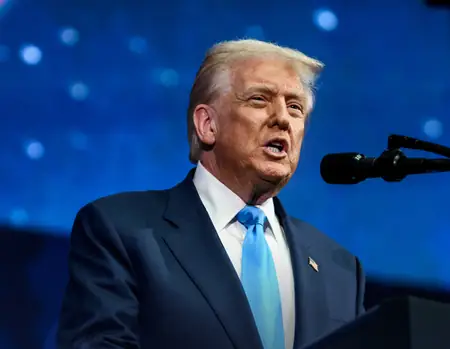
President Donald Trump is turning up the heat on America’s northern neighbor, threatening massive tariffs in a dispute over private jet certifications. On January 30 from Washington, Trump accused Canadian regulators of stonewalling Gulfstream’s elite fleet: the G500, G600, G700, and G800. ‘These are the world’s best jets, yet Canada illegally denies them certification,’ he blasted on Truth Social.
This isn’t mere rhetoric. Trump vowed to yank approvals for Bombardier’s Global Express and all Canadian aircraft until parity is restored. He portrayed it as essential justice for Gulfstream, an American icon struggling to penetrate the Canadian market due to what he calls biased processes.
Enter the big gun: a 50% tariff on every Canadian plane entering the US market. ‘Fix it now, or pay dearly,’ Trump declared, underscoring urgency. Such levies could cripple Bombardier, a key player, and disrupt integrated North American aviation supply lines.
Domestically, the announcement drew fire. Senator Kirsten Gillibrand (D-NY) decried it as ‘irresponsible aggression’ against a vital partner. Recalling Trump’s history of tariff saber-rattling—from Canada to South Korea and NATO allies—she demanded a halt. New York’s dependence on Canadian imports like power, farm supplies, and vehicle components makes it especially vulnerable.
‘Prior tariffs hit NY families with $4,200 in added costs,’ Gillibrand noted, painting a picture of escalating prices amid current economic pressures. Inflation-weary consumers, she argued, deserve stability, not provocation.
As two of the world’s largest trading partners, US-Canada relations hinge on mutual trust. Analysts warn this row over aviation rules could fracture supply chains in critical sectors, testing bilateral bonds. With Trump’s post drawing millions of views, expect intense negotiations ahead to defuse the bomb.