




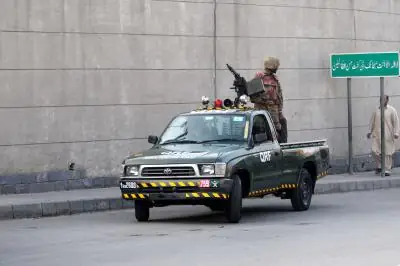
In a move underscoring deepening concerns over South Asian stability, the United States State Department has elevated its travel advisory for Pakistan to Level 3, advising Americans to reconsider all travel plans. Local reports from Islamabad on Thursday spotlighted the update, driven by pervasive threats of terrorism, violent crime, and kidnappings.
As detailed by Dawn, the Level 3 status warns of unpredictable terrorist strikes targeting a wide array of public spaces: from transportation nodes and hospitality venues to commercial centers, security sites, aviation facilities, educational institutions, medical centers, religious sites, scenic attractions, and official structures. No corner of the nation appears immune.
Level 4 restrictions blanket specific zones, notably sections of Khyber Pakhtunkhwa, where officials implore zero tolerance for visits. These areas witness frequent attempts at homicide and abduction, endangering both dignitaries and everyday people.
Applicability spans all US passport holders, including those with Pakistani roots. The bulletin singles out Balochistan and Khyber Pakhtunkhwa—including legacy FATA—for shunning due to rampant extremism and hostage-taking. Militant outfits have perpetrated attacks across Pakistan, concentrating in these frontiers yet infiltrating metropolises such as Karachi and the capital.
Legal pitfalls abound too. Pakistan enforces bans on unpermitted rallies, with security apparatus scrutinizing proximity. Detentions of US nationals at protests are documented, alongside risks from online dissent against state entities on social platforms.
Contextualizing this, early this month saw the Trump administration halt immigrant visas for 75 nations spanning Africa, the Middle East, the Caribbean, Latin America, the Balkans, and parts of South Asia like Pakistan and Bangladesh from January 21. Islamabad’s diplomatic response tempers optimism for a swift reversal, bracing for application pileups.
Experts urge vigilance: monitor official channels, prepare contingency plans, and prioritize safety above all in this high-stakes environment.