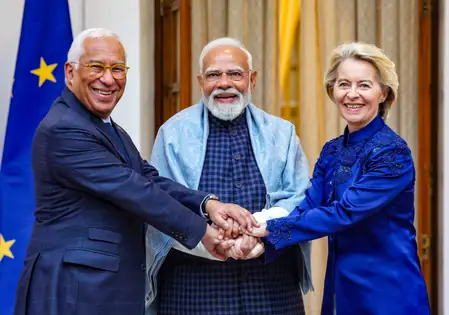




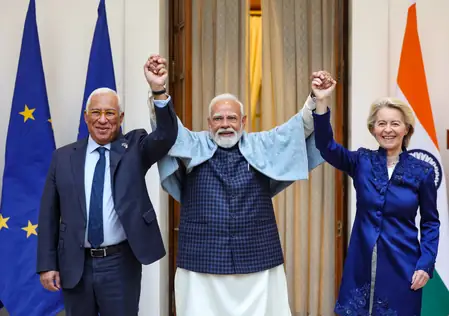
The newly inked India-EU Free Trade Agreement is set to revolutionize India’s export landscape, with experts predicting a boom in textiles, footwear, and leather goods. This historic pact, after two decades of negotiations, promises not just higher revenues but also a surge in employment and investments, breathing new life into labor-heavy industries.
In an interview, Kumar Duraaiswamy from Tirupur Exporters Association termed it the ultimate trade breakthrough. He envisions textile exports hitting $40 billion by 2030, up from $13 billion today, fueled by policy synergies and this FTA. Tirupur’s dominance is clear: 45,700 crore rupees in knitwear exports, 68% of national totals, with Europe-bound shipments at 25,000 crore rupees—expected to reach 50,000 crore soon.
The U.S. tariff hurdles had cast shadows, but EU opportunities are revitalizing exporter confidence. European giants are eyeing factory setups in India, while Tamil Nadu’s textile summit spotlights the region’s prowess.
Rafiq Ahmed of Kothari Industrial sees it as a pivotal win for footwear and leather, sectors rich in job multiplication. ‘Invest 1,500 crore rupees, employ 25,000—mostly women,’ he emphasized, calling for sector-specific incentives.
Dr. Sanjeev Saran praises the deal for opening a massive market, offsetting adversarial tariffs elsewhere. It will diversify India’s offerings, spur investments, and demand upgrades to meet EU standards on quality and tech.
India’s stable politics and core strengths in textiles draw investors fleeing unstable regions. CEPC’s Mukesh Gomber highlights gains in machinery, tech, and value-added products like carpets, countering American pressures.
Overall, this equitable agreement tilts favorably toward India’s strengths, heralding export leaps, job booms, and enhanced global manufacturing stature.