

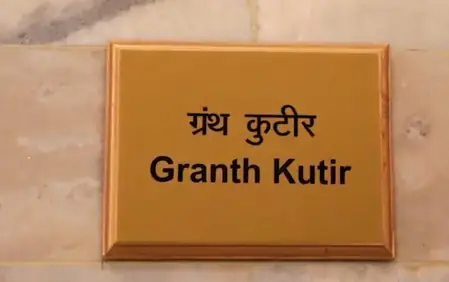
President Droupadi Murmu has launched a cultural landmark at Rashtrapati Bhavan—the Granth Kutir, a dedicated repository boasting 2,300 volumes in India’s newly expanded roster of 11 classical languages. From Tamil and Sanskrit to the recently recognized Marathi, Pali, Prakrit, Assamese, and Bengali, this collection captures the essence of millennia-old wisdom.
More than just a library, Granth Kutir illuminates India’s diverse intellectual traditions through works on epics, philosophy, history, science, governance, and bhakti poetry. The Indian Constitution finds expression in these languages too, alongside about 50 priceless manuscripts on palm leaves, bark, and fabric—artifacts of ancient scribal artistry.
This ambitious project emerged from partnerships across government bodies, academia, research centers, and private philanthropists. Key support comes from the Education and Culture Ministries, with the Indira Gandhi National Centre for the Arts leading on conservation and curation.
At its core, Granth Kutir seeks to awaken national pride in our literary legacy, countering colonial legacies by highlighting unity amid linguistic diversity. It dovetails with the Gyan Bharatam Mission’s drive to digitize and safeguard India’s manuscript wealth, making it accessible via modern tech.
The venue’s past colonial holdings—Hogarth prints, Curzon speeches, and administrative records—have been moved, digitized, and opened to scholars online.
Integrated into Circuit 1 tours, the Kutir offers tourists a peek into these riches. Digital access via portal awaits the public, with researchers able to request physical visits.
Iconic texts abound: Vedas in Sanskrit, Buddhist Vinaya Pitaka in Pali, Jaina scriptures in Prakrit, Charyapada tantric verses in eastern languages, ethical Tirukkural in Tamil, epic retellings in Telugu and Malayalam, and Kannada’s foundational poetics in Kavirajamarga.
In her speech, President Murmu hailed these languages as culture’s foundation. ‘They’ve illuminated global paths in yoga, Ayurveda, math, and more,’ she declared. Panini’s grammar, Aryabhata’s astronomy, and surgical texts by Charaka-Sushruta continue to amaze, influencing modern languages and justifying their exalted status.
‘Preserving this knowledge bridges past and future,’ she asserted. Calling for university programs, youth engagement, and library expansions, she positioned Granth Kutir as a dynamic hub that will expand and educate, drawing in eager minds to delve into our classical roots.