

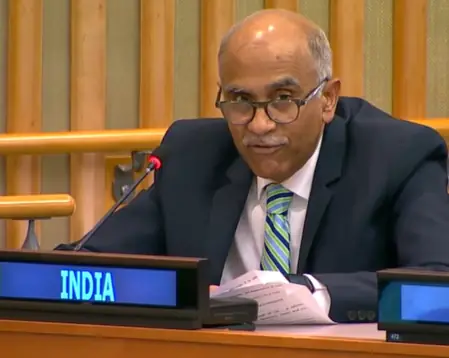
United Nations, January 22: The G4 alliance of India, Brazil, Germany, and Japan has stepped up pressure for Security Council reforms, presenting a detailed roadmap to break the impasse and avert deeper humanitarian crises. In IGN discussions, Indian envoy P. Harish warned that prolonged delays are fueling suffering in conflict zones worldwide.
Harish painted a grim picture: ‘The world is navigating unprecedented challenges, and the UN’s inability to respond effectively is under scrutiny.’ He accused entrenched interests of erecting barriers, sharing blame for the Council’s paralysis.
Opposition comes from the Uniting for Consensus group, which insists on exhaustive consensus before advancing any negotiating text. Italian diplomat Gianluca Greco defended this stance, underscoring UfC’s goal to prevent premature expansion.
Undeterred, the G4 advocates a consolidated text drawing from member states’ ideas, setting the stage for structured dialogue. Their model envisions a larger Council with enhanced permanence: six new permanent seats allocated regionally—two each to Africa and Asia-Pacific, plus one to Latin America and Western Europe.
Specific endorsements include seats for India and Japan in Asia-Pacific, Brazil in Latin America, and Germany in Western Europe. Additional non-permanent expansions would address gaps in Africa, Eastern Europe, and small islands, explicitly opposing faith-based criteria that could complicate talks.
The proposal aligns with geopolitical shifts, countering Africa’s underrepresentation despite widespread backing for its permanent inclusion. Harish challenged detractors: supporting justice while blocking African seats is inconsistent.
Japan’s Kazuyuki Yamazaki reinforced the disparity, noting Asia-Pacific’s 54 UN members and vast population are underserved by current seats. With daily casualties mounting, the G4’s initiative demands attention—reform or risk the UN’s obsolescence in a multipolar world.