

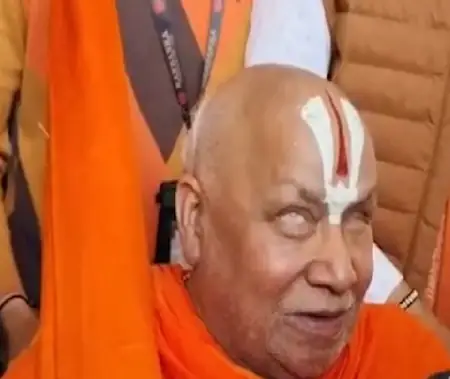
Gwalior’s spiritual heavyweight Jagadguru Rambhadracharya has waded into the Prayagraj showdown, squarely blaming Swami Avimukteshwaranand for the chaos that unfolded on Mauni Amavasya. What began as a routine Ganga bath attempt escalated into a standoff, protest, and official scrutiny over the swami’s self-proclaimed Shankaracharya status.
‘He didn’t face any wrong; he wronged others,’ Rambhadracharya stated bluntly. Detailing the incident, he explained that Sangam Ghat rules explicitly ban vehicular or processional entries. When police intervened, suggesting a pedestrian approach—as is customary—the swami allegedly defied them, leading to scuffles.
‘We ourselves walk to the Ganga for immersion,’ the Jagadguru added, positioning his critique from a place of authority. As a recognized Jagadguru, he questioned Avimukteshwaranand’s unverified title claims, especially after the administration’s formal notice demanding clarification.
Echoing sentiments from the sant samaj, critics within the community warn that such actions discredit governance and play into the hands of those undermining Sanatan values. Avimukteshwaranand’s persistent allegations against police and state, they say, fuel divisive narratives.
Rambhadracharya’s commentary extended to political interjections by Digvijaya Singh, who recently railed against RSS visions of Hindu nationalism during an MGNREGA rally. Singh argued India’s pluralism leaves no room for majoritarian shifts and traced ‘Hindu’ to Persian distortions of ‘Sindhu.’
Dismissing this as ignorance, Rambhadracharya quipped, ‘He has zero grasp of scriptures.’ The exchange underscores ongoing clashes between traditional seers and secular politicians, with the Sangam episode exposing fault lines in ritual observance and religious authority.
With Avimukteshwaranand dug in at his dharna, the controversy tests the balance between devotion, discipline, and democratic oversight in India’s vibrant spiritual landscape.