

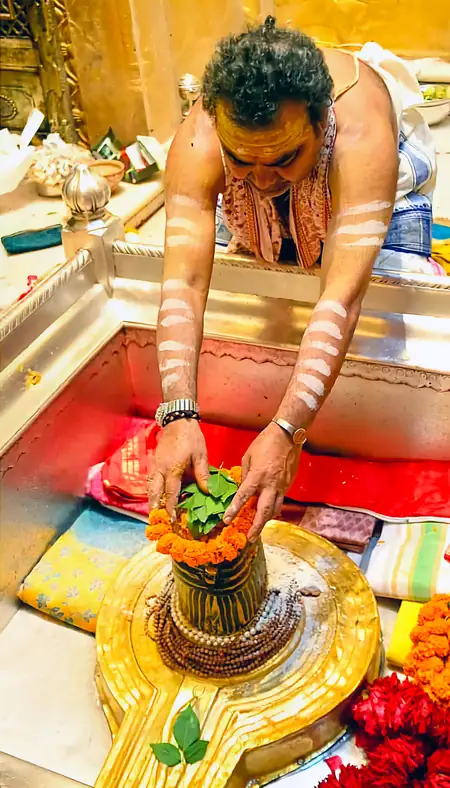
Vasant Panchami is synonymous with Saraswati Puja, where students pray for sharp intellects amid stacks of fresh notebooks. Yet, beneath this scholarly reverence lies a joyous ritual honoring Lord Shiva’s impending marriage—the Tilak Utsav. This practice, deeply rooted in Hindu lore, transforms temples into wedding venues in preparation for Mahashivratri.
Puranic tales describe Shiva and Parvati’s celestial wedding, with Vasant Panchami acting as the ceremonial kickoff. Nowhere is this more alive than in Varanasi’s ancient ghats and mandirs. Here, Shiva is dressed as a groom: his brow marked with vibrant haldi-chandan tilak, body splashed with gulal, evoking the excitement of a pre-wedding soiree.
Pilgrims arrive in droves, offering marigolds, turmeric paste, and heartfelt prostrations. ‘The vairagi Shiva now dons the groom’s garb,’ they whisper, as the rituals ignite fervor for the divine nuptials ahead. This tradition underscores Shiva’s transition from eternal ascetic to devoted spouse.
No Shiva Tilak is complete without kesariya malpua bhog—golden pancakes drenched in saffron sweetness, symbolizing spring’s bounty and matrimonial bliss. Celebrations spill into streets with processions, music, and communal feasts, uniting thousands in ecstasy.
Intriguingly, the day also sees the Holika danda being planted, a nod to Holi’s imminent arrival. From Kashi’s sacred lanes to remote villages, Vasant Panchami’s dual essence—learning and love—continues to enchant, preserving age-old customs in modern times.