



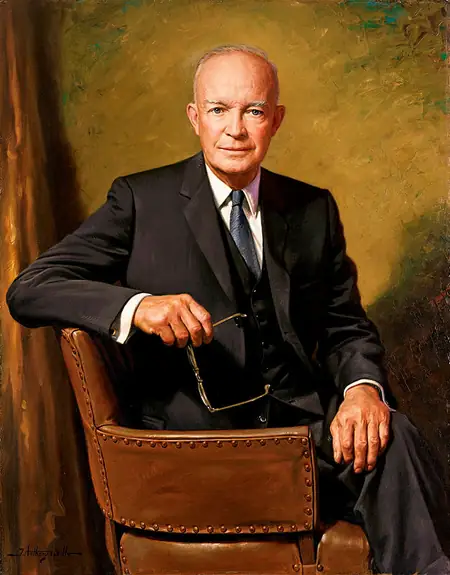
Picture this: a decorated war hero, architect of D-Day, stands before the nation as president and sounds the alarm on his own government’s trajectory. Dwight Eisenhower’s 1961 farewell speech wasn’t just a retirement note; it was a bombshell exposing the ‘military-industrial complex.’ This unholy trinity of generals, arms makers, and politicians threatened to steer America toward perpetual conflict for profit.
Eisenhower knew the terrain well. From the battlefields of Europe to the Oval Office, he’d witnessed how victory in World War II spawned a new beast: a defense sector that never demobilized. Factories churned weapons in peacetime, jobs depended on arms deals, and influence peddlers shaped foreign policy. ‘Every dollar spent on arms is a dollar not spent on schools or hospitals,’ he implied, pushing for smarter priorities.
What made it extraordinary? This came from a Republican hawk, not a dove. He demanded public oversight, warning that only alert citizens could prevent this complex from acquiring ‘unwarranted influence.’ He fretted over research dollars funneled solely into weaponry, at the expense of broader progress.
History proved him prophetic. Vietnam’s quagmire, endless Middle East engagements, and today’s drone wars all trace back to that complex’s grip. In an era of private military firms and AI arms races, revisiting Eisenhower’s speech isn’t nostalgia—it’s a survival guide for democracy.