




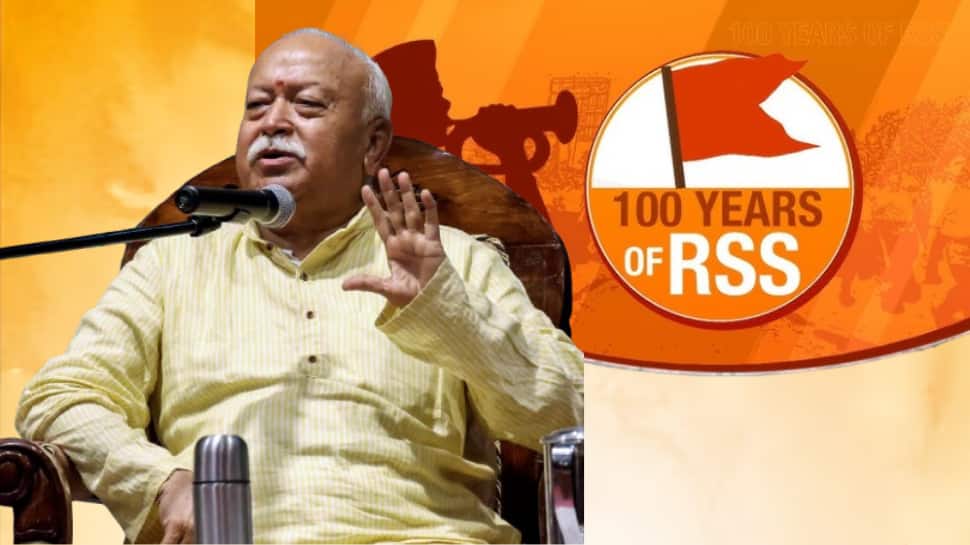
Mohan Bhagwat, the chief of the Rashtriya Swayamsevak Sangh (RSS), has emphasized the inclusive nature of the organization, stating that individuals from all communities, including Muslims and Christians, are welcome. Bhagwat made these remarks during the inauguration of a two-day lecture series, ‘100 Years of Sangh Journey: New Horizons,’ held at PES University Auditorium in Bengaluru, marking the start of centenary celebrations for the RSS, which was founded in 1925.
Bhagwat traced the RSS’s origins to a need for social unity and national reconstruction during a period of historical division and invasions in India. He highlighted the crucial role of Hindus in preserving the nation’s ancient identity and values. The RSS chief clarified that the organization is not a political entity, focusing instead on societal strengthening and supporting policies beneficial to the nation without formal political affiliations. He also urged citizens to take personal responsibility for maintaining societal discipline, harmony, and mutual respect.
Addressing queries about the RSS’s lack of registration, Bhagwat explained its historical context, noting it began operations in 1925 during British rule and saw no necessity to register with the colonial government. He further defended the organization’s legal standing, mentioning its three bans post-Independence, all of which were subsequently lifted by court rulings, validating its legal existence. Bhagwat asserted that the RSS operates within the Indian Constitution, negating the need for formal registration, drawing a parallel to unregistered entities like Hindu Dharma itself.
Bhagwat reiterated the Sangh’s inclusive stance, welcoming anyone who identifies with ‘Bharat Mata.’ He explained that while the RSS is rooted in Hindu society, people of all faiths, including Muslims and Christians, can participate in its local branches, or ‘shakhas,’ provided they approach with a spirit of unity and belonging. The primary mission of the RSS, according to Bhagwat, is to organize and strengthen Hindu society to foster a prosperous and self-reliant India, aiming to share global knowledge of Dharma for peace and happiness. He concluded by stating that once this objective is achieved, the Sangh’s work will be complete.


