

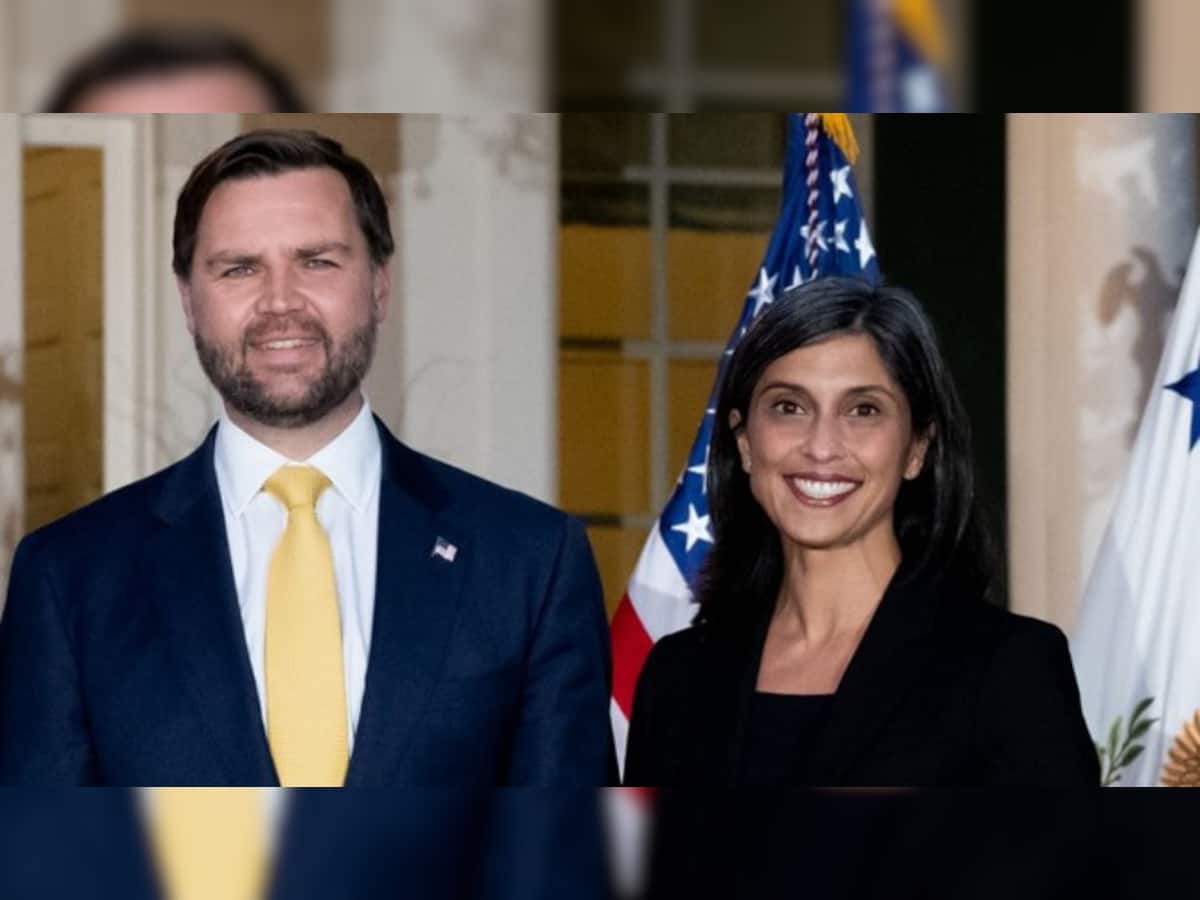
US Vice President JD Vance has strongly defended his recent comments expressing hope that his wife, Usha Vance, who is Hindu, would one day become a Christian. Vance described the intense backlash as ‘disgusting’ and a misrepresentation of his views, particularly addressing accusations of disrespecting his wife’s faith. He asserted that Usha is not a Christian and currently has no intention of converting.
The controversy originated from Vance’s appearance at a Turning Point USA event where he was asked about his interfaith marriage and whether his wife would ‘come to Christ.’ His response, indicating a personal hope for her conversion, quickly drew sharp criticism on social media platforms. Many interpreted his statement as dismissive of her Hindu beliefs and an attempt to appease a particular audience.
Responding to the online furor, Vance took to X (formerly Twitter) to issue a detailed rebuttal. He called the criticism ‘disgusting’ and highlighted that the initial question came from someone on the ‘political left’ regarding his interfaith marriage. Vance emphasized that as a public figure, he did not shy away from the question. He further argued that the negative reactions exhibited ‘anti-Christian bigotry.’
Vance clarified that his intention was never to pressure or undermine his wife’s religious convictions. He stressed that conversion is a matter of ‘God-given free will’ and he would never force such a decision. He also acknowledged Usha Vance’s significant positive influence on his own Christian faith, crediting her for encouraging his reconnection with Christianity and playing a vital role in his spiritual journey.
In a direct exchange with Ezra Levant, publisher of Rebel News, Vance reiterated that his marriage is founded on ‘mutual respect, trust, and understanding,’ despite their differing religious backgrounds. He reaffirmed his respect for her Hindu faith, while maintaining his personal spiritual hopes. Vance’s statements and subsequent defense continue to fuel discussions in the US concerning interfaith relationships, public figures’ religious expressions, and the complexities of personal faith.