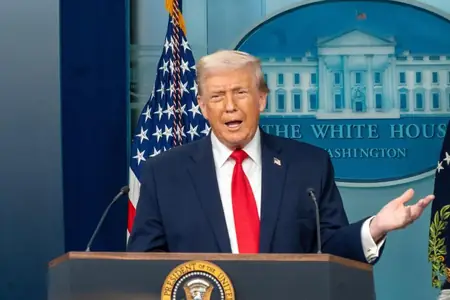


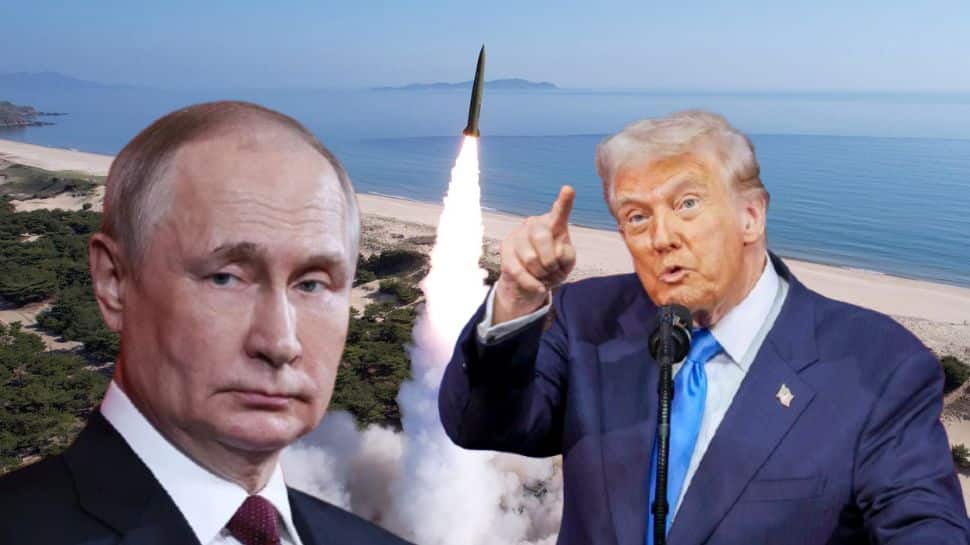
President Donald Trump announced Thursday that the United States will immediately resume nuclear weapons testing, ending a decades-long moratorium. This decisive action follows recent advancements by Russia in nuclear-powered super-weapons, specifically the Poseidon nuclear torpedo and the Burevestnik cruise missile. These advanced Russian systems are designed to overcome existing American defense capabilities, prompting a strong reaction from the White House.
Trump cited “other countries’ testing programs” as the primary driver for this policy shift. While not explicitly naming Russia, the timing clearly indicates Moscow’s recent successful tests were the catalyst. The Poseidon torpedo is reportedly capable of remaining submerged for extended periods, and the Burevestnik boasts nearly unlimited range, posing significant strategic challenges.
The President outlined a perceived global nuclear hierarchy, placing the U.S. first, Russia second, and China third. However, he expressed serious concern that China could achieve parity with Russia in nuclear capabilities within the next five years. The integration of Russia’s new, hard-to-defend-against weapons into this equation, he suggested, diminishes America’s current nuclear advantage.
The directive to the Department of War is unequivocal: the U.S. will commence testing “on an equal basis” with other nations. This signifies a commitment to matching the testing frequency and scope of international rivals. The process is set to begin without delay, signaling a potentially dramatic escalation in global military readiness and a renewed era of nuclear competition. This move effectively reopens the door to a nuclear arms race, a scenario many believed had concluded with the Cold War.