


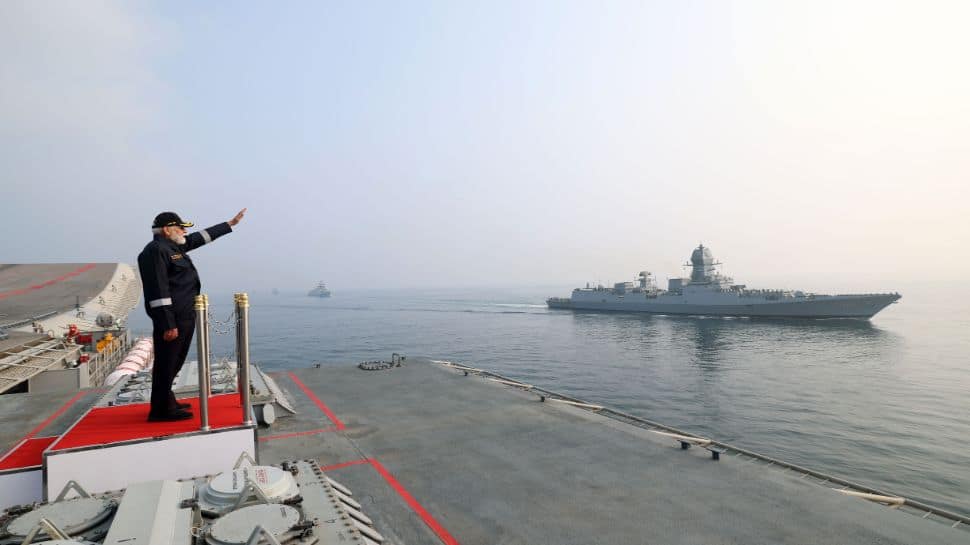
Prime Minister Narendra Modi recently graced the deck of INS Vikrant, India’s indigenously built aircraft carrier. Unseen but potent, directly beneath where he stood, lay a sophisticated defense system: the Barak-8 missile launcher, integrated within the ship’s vertical launch system (VLS). This advanced technology represents a significant leap in India’s naval capabilities, transforming the carrier into a self-sufficient fortress at sea.
The 32-cell VLS houses the formidable Barak-8 surface-to-air missile. Each missile is engineered to intercept and neutralize threats such as enemy aircraft, drones, or incoming missiles from up to 100 kilometers away. This capability effectively grants INS Vikrant the defensive power of a destroyer, a rarity for aircraft carriers worldwide. Unlike many carriers that rely on escort ships for air defense, Vikrant possesses a comprehensive, integrated system, allowing it to operate independently and command its own protection.
The Barak-8, a joint development between India and Israel, lives up to its Hebrew name meaning ‘lightning.’ This missile is designed for swift and decisive engagement. It autonomously tracks targets using its onboard radar, locks on, and proceeds to destruction at speeds exceeding 2,500 kilometers per hour. Its 60-kilogram warhead ensures devastating impact. Remarkably, the missile’s performance remains uncompromised by adverse weather conditions like rain or fog, ensuring a near-perfect hit probability. Weighing 275 kilograms and measuring 4.5 meters, the Barak-8 is a compact yet immensely powerful weapon capable of reaching altitudes of up to 20 kilometers. A single missile can pursue a target, and the carrier’s full complement of 32 missiles can eliminate an entire incoming threat formation.
INS Vikrant, a 40,000-ton marvel of Indian engineering capable of speeds up to 30 knots, is designed to carry 26 MiG-29K fighters and eight helicopters. However, its true strength lies in its internal defense architecture. Hailed as a ‘mini-destroyer’ by defense analysts, its self-contained VLS system grants it unprecedented autonomy. This independence marks a pivotal moment for India’s defense industry, reducing reliance on foreign systems and strengthening Indo-Israeli defense ties. As INS Vikrant patrols the Indian Ocean, it stands as a symbol of India’s growing self-reliance and strategic prowess, its powerful hidden armament ready to strike.